 © Tomáš Leňo
Tomáš Leňo
© Tomáš Leňo
Tomáš Leňo
Multiple authors
DOUBLE PLEASURE: TWO POLES OF THE IMAGE
 © Kateřina Sýsová
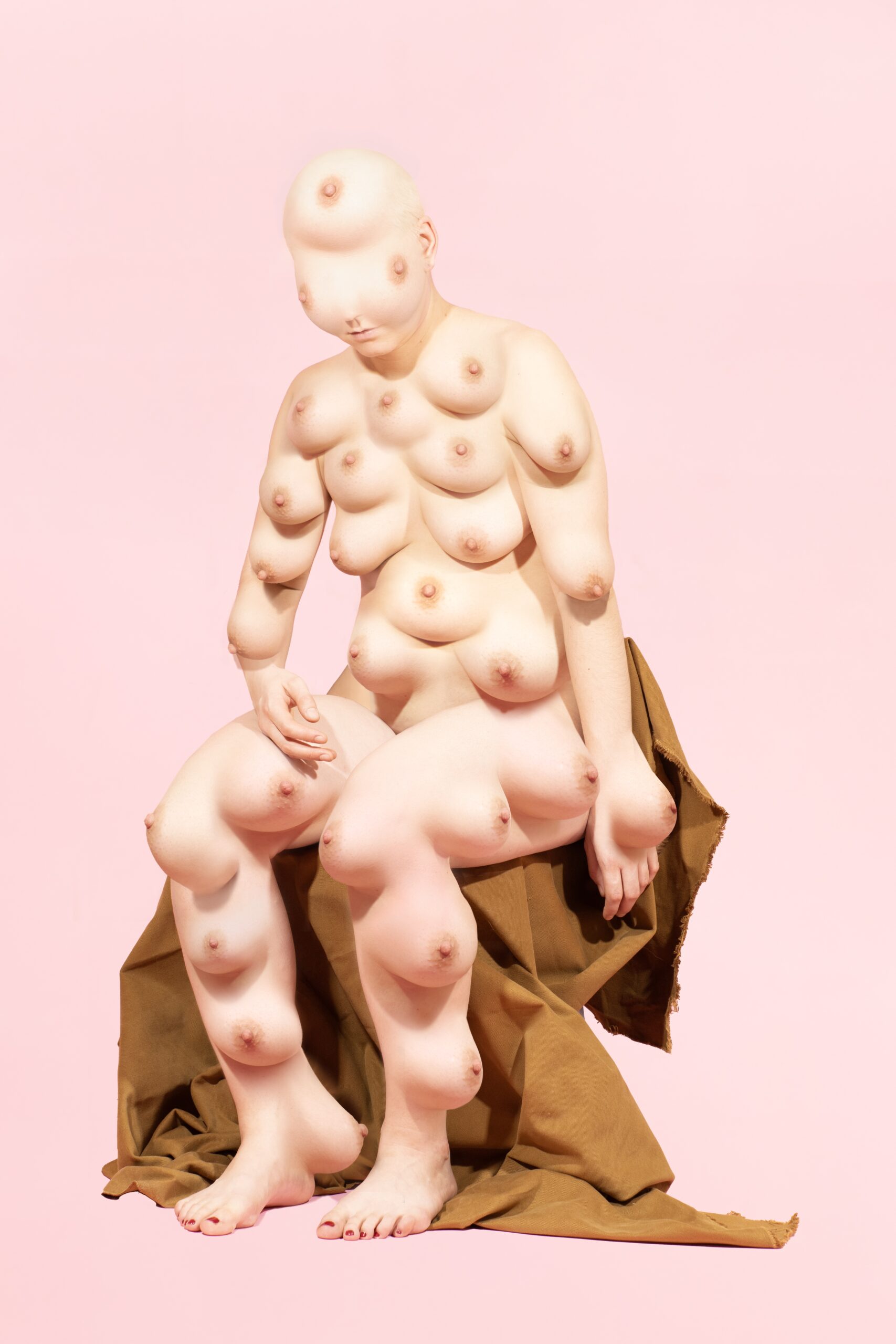
 Photography entered the history of the image with the audacity befitting a modern invention. It was faster than painting, more precise than the painter’s hand, and indifferent to the hierarchy of things. With equal thoroughness, it was capable of capturing a human face, a fold in a garment, or an insignificant object in the background. Yet it was not enough for photography merely to rival painting. It sought to surpass it in what had been painting’s privilege for centuries: the perfection of its imitation of reality. Yet accuracy is not art. Photography therefore began to conceal its mechanical origins and emphasise the hand of the artist. It staged, blurred, softened, and retouched. Gum printing, carbon printing, oil printing, bromoil printing, and platinum printing lent it the softness of drawing, the depth of graphic art, and the uniqueness of a painting. The paradox of the new medium had emerged. Photography demonstrated its autonomy by resembling painting. Soon, however, it took over one of painting’s important social roles. Dynastic galleries were reduced to family albums, and the portrait, once the privilege of the chosen few, became an accessible part of personal memory. Before long, the roles were reversed. The photographic image became a model for painting, bringing with it unexpected crops, arrested movements, unusual perspectives, and the chance effects of light. Photography learned from painting how to transform reality. Painting learned from photography to question what the eye actually sees. In postmodern art, this exchange of roles turns into a complex game. The painted work becomes an object of quotation, reinterpretation, and appropriation. Photographers adopt its composition, motif, or characteristic gesture; sometimes the painting itself even becomes a physical model placed in front of the camera. Historical scenes are reconstructed, tableaux vivants are staged, and the artificiality of the resulting scene is deliberately exposed. Digital technologies then make it possible to combine the incompatible, alter bodies and landscapes, and create realities that never existed, yet nevertheless appear strangely convincing. The exhibition Double Pleasure traces this long dialogue in which painting and photography continually exchange roles. At one moment, photography pretends to be painting; at another, painting adopts the cold precision of the photographic gaze. Truth encounters fiction, the original encounters reproduction, and the handmade gesture encounters the technical record, without it being possible to determine which of them will have the final word. The pleasure of the image is therefore twofold. It is the pleasure of resemblance, through which we recognise the world, and at the same time the pleasure of transformation, which makes us question that resemblance. Štěpánka Bieleszová
More exhibitionsAll exhibitions →
© Tomáš Leňo
Tomáš Leňo
Central European House of Photography 2005–2025
 © Jana Mensatorová
Multiple artists
© Jana Mensatorová
Multiple artists