 © Arkadiusz Gola
Multiple artists
© Arkadiusz Gola
Multiple artists
Letizia Battaglia
HUMANITY IN THE SHADOW OF COSA NOSTRA
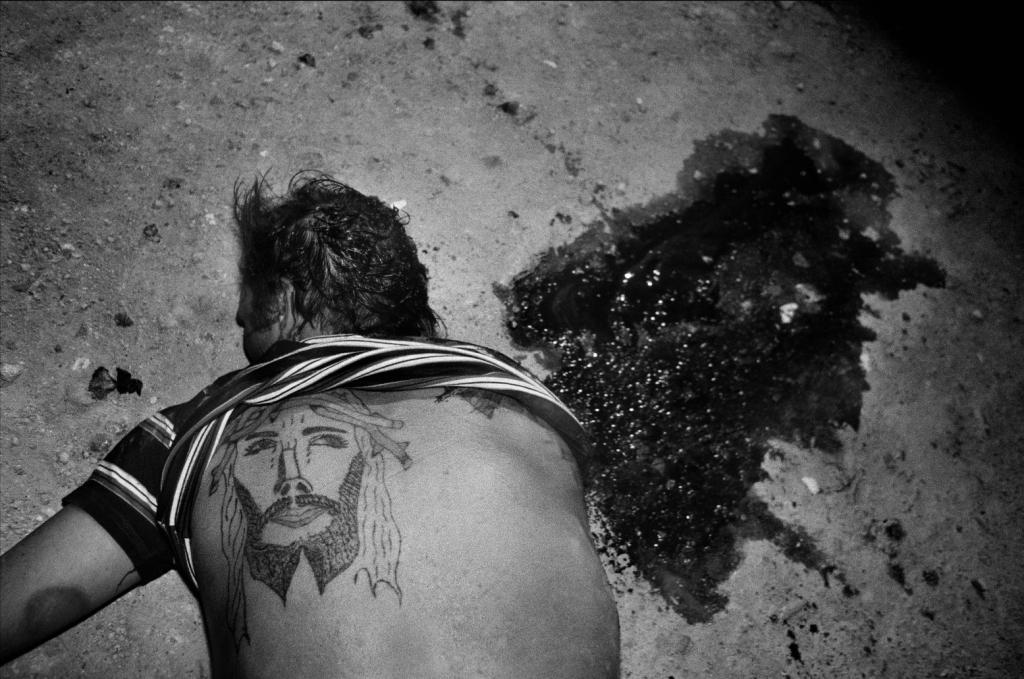 © Letizia Battaglia
 Letizia Battaglia (1935–2022) is undoubtedly one of the most important figures in Italian documentary photography. She was born in Palermo, Sicily, and grew up in various Italian cities as her family moved several times, but when she was ten, the family returned to Palermo. It was a very conservative environment. At this age, she was already harassed by men on the street, so her parents preferred to keep her at home. At the age of sixteen, she escaped from home, got married, and gradually raised three children. She began photographing only after leaving her husband, when in 1969 she was working as a journalist and began producing photographs to accompany her articles. After three years of living in Milan and returning to Palermo, she managed the photographic department of the local edition of L’Ora, while capturing everyday life in the city and the growing violence associated with Mafia wars. Her photographs are black and white, but one can feel the physical presence of blood in them. Together with her partner Franco Zecchino, who was eighteen years younger, she founded the Laboratorio d’IF photography centre, which significantly influenced the next generation of Italian photojournalists. In the second half of the 1980s and early 1990s, she was involved mainly in municipal politics, representing the Green Party. She supported anti-Mafia activities and, towards the end of her life, founded the International Centre of Photography in Palermo. It is also worth mentioning the “Czechoslovak” trace of Letizia Battaglia. A long friendship connected Letizia Battaglia and Franco Zecchino with Josef Koudelka. Thanks to them, Koudelka began travelling regularly to Sicily in April 1980. Together, they attended religious processions and feasts, photographed social life in Palermo, and he took an interest in Mafia trials. Above all, Koudelka photographed the psychiatric hospital in Palermo from 1980 to 1996. Letizia Battaglia spent most of her life in Palermo, and it is precisely her relationship to this city that is one of the keys to understanding her photographs. Her photographs of the Mafia, children, young girls, women, poor neighbourhoods, religious festivals, executed bodies, and portraits of figures from Palermo represent different layers of the same place. Battaglia created a comprehensive picture of one locality and its social habitat with all social, political, and cultural contradictions. A picture in which daily life and violence, great history and private life, personal experience and social reality are constantly intertwined. It is precisely because of our understanding of the extent to which Letizia Battaglia managed to capture a comprehensive image of one place in such a unique way that we abandoned the usual effort to present her work in its entirety and instead focused our attention exclusively on photographs from Sicily. Therefore, we omitted photographs she created in other cities in Italy and elsewhere in the world, including Prague, as well as portraits of important actors and musicians. The most famous part of Letizia Battaglia’s work are images of Mafia violence and court trials. The 1970s and 1980s represented one of the darkest periods in Italy’s modern history. Palermo was the scene of dozens of assassinations and murders of judges, police officers, journalists, and politicians. Battaglia was the first Italian photojournalist to document the crimes of the Sicilian Mafia organisation Cosa Nostra, often being the first reporter at the crime scene. She captured dead bodies in the streets, bereaved relatives, investigators, as well as curious locals. These photographs have become not only journalistic documents, but also historical testimony to a time when organised crime had a major impact on life in Sicily as a whole. Here, the visual experience of violence becomes one of the most striking motifs of her entire work. Nevertheless, Battaglia did not seek to aesthetise violence. On the contrary: her photographs often reveal its banal, physical, and even everyday form. She captured crime in the period when it came to the surface in its worst form. Ever since, it has not disappeared; it has just become much less spectacular and interesting for the camera. Her later work focuses more on women, children, daily life, religious and social festivals, the lives of the richest classes as well as on poor people living in slums and narrow streets. These photographs may at first appear to be a lyrical counterpart to the photographs of the Mafia. In fact, they are their natural continuation. Battaglia did not capture “two Sicilies” – one violent and the other poetic; she photographed one society in which these opposites coexisted. Letizia Battaglia’s images are undoubtedly deeply Sicilian. However, they can also appeal to a Central European audience. Not because our social experience was identical, but because we too live in specific places with their own conflicts, social differences, and historical strata. Battaglia teaches us that we should not take our environment for granted, but as space worth systematic photographic research. And that photographing one’s own world means taking responsibility for what one sees in it. Tomáš Pospěch
More exhibitionsAll exhibitions →
© Arkadiusz Gola
Multiple artists
 © Sissa Micheli
Sissa Michelli
© Sissa Micheli
Sissa Michelli
SCENARIOS FOR PEACE
 © Ivo Dančev
Ivo Dančev
© Ivo Dančev
Ivo Dančev