Multiple artists
The Loners
 © Jana Mensatorová
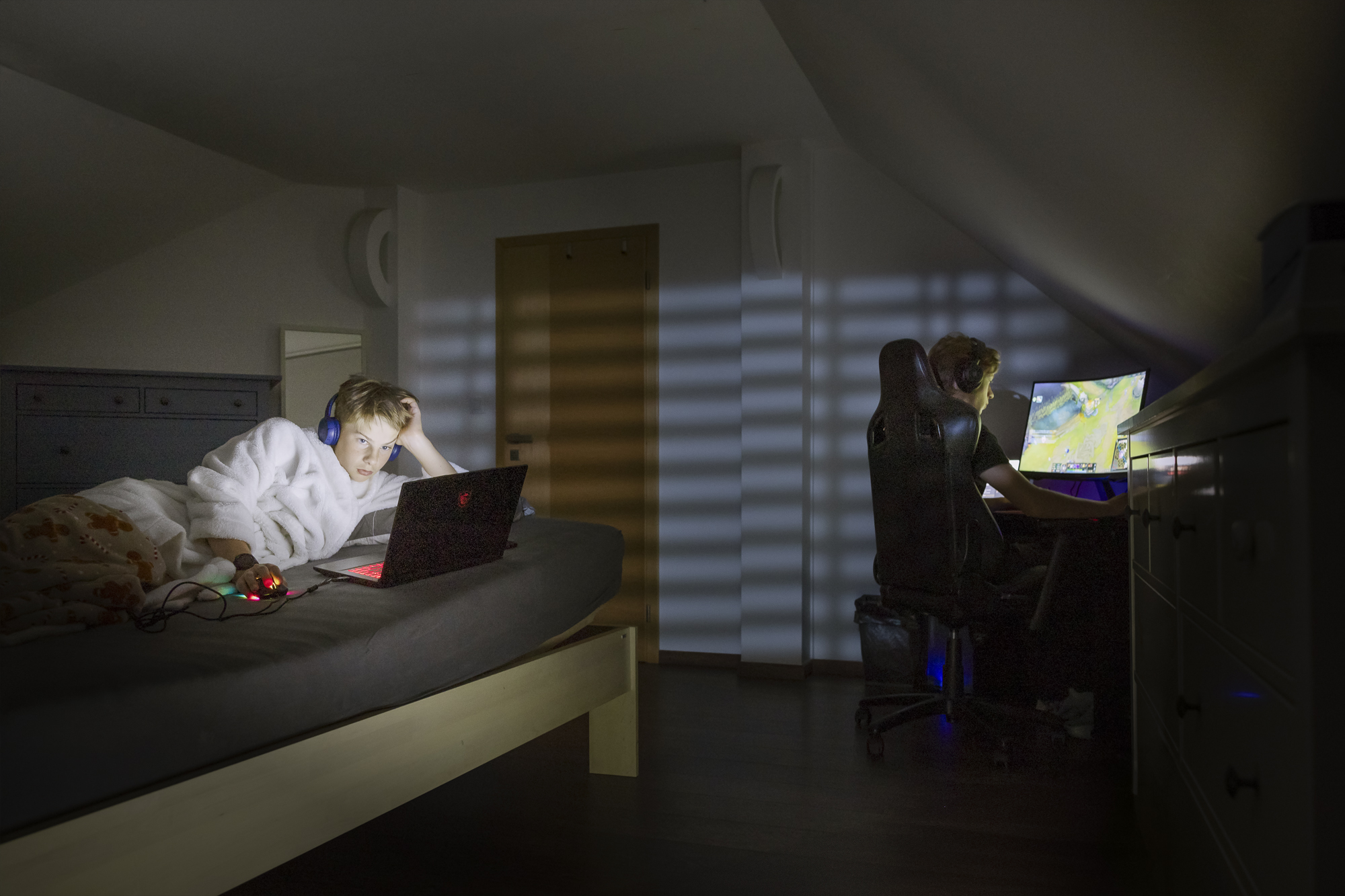
THE LIVES OF VOLUNTARY AND INVOLUNTARY LONERS THROUGH THE EYES OF STUDENTS AND RECENT GRADUATES OF THE INSTITUTE OF CREATIVE PHOTOGRAPHY, FACULTY OF SCIENCE AND PHILOSOPHY OF THE SILESIAN UNIVERSITY IN OPAVA Never before have so many people in Central Europe lived alone. In 1930, fewer than 8 percent of people in the Czech lands lived in single-person households; by 2021, the figure had risen to 39 percent, compared with 35 percent in Slovakia and 23 percent in Poland. Whereas an average of four people lived in a single flat in Prague a hundred years ago, today almost half of all flats are occupied by just one person. This is by no means limited to older people whose partners have died or to those who are divorced. Increasing numbers of young people also remain single for various reasons. In the Czech Republic, their proportion has risen sharply: while in 1991 just over 10 percent of people under the age of 35 were unmarried, by 2024 the figures had reached 64.5 percent among men and 51.6 percent among women in this age group. Many of them, of course, live with partners without being married, but many also genuinely live alone. At the same time, it is not only the number of people living alone that is increasing dramatically, but also the number of those who experience loneliness even when surrounded by other people – whether for psychological reasons, because of illness, or simply because they find themselves unable to establish meaningful social connections. There are also those who deliberately choose to live alone and embrace the independence and freedom it can offer. It is therefore hardly surprising that loneliness and solitude have increasingly become themes in the final projects, bachelor’s and master’s theses, and doctoral research of students at the Institute of Creative Photography, Faculty of Philosophy and Science, Silesian University in Opava. The choice of this subject is often rooted in personal experience, with photography serving, in some cases, as a form of art therapy. Many of the works, however, also offer a broader sociological perspective on the lives of people who live alone, whether by choice or against their will. Solitude can be a consciously chosen way of life, a space for self-discovery, freedom, and creative work, as well as the consequence of life circumstances or difficulties in forming partnerships and social relationships. Loneliness, by contrast, more often describes an unwanted state of isolation, separation, or feeling misunderstood. The boundary between the two concepts, however, is far from clear-cut. It is precisely this fluidity that becomes an important element of the photographic series presented here. Among the most poignant works in the exhibition are those depicting the progression of dementia in elderly people who find themselves increasingly isolated even within their own families. Iwona Germanek approaches this subject with extraordinary sensitivity and visual inventiveness in Fragrance, a multimedia series about her mother. Marta Wojnarowska-Olszewska explores a similar theme in I Don’t Remember Anymore, capturing the gradual transformation of the shared world she inhabits with her mother through subtle changes in everyday objects and rituals. In Non-Monday, Lenka Vaculínová portrays her grandmother alongside telling details of the objects that surround her, showing how the struggle with an incurable illness can, unintentionally, become a source of creative expression. The lives of older people, however, are complicated not only by dementia but also by other illnesses that can intensify their sense of isolation. This is evident, for example, in Dariusz Zakrzewski’s photographs of his mother and in Joanna Watala’s series Breath, which portrays people dependent on respirators to cope with severe breathing difficulties and who are consequently confined to their homes. Jana Mašterová’s humanistic documentary series A Story of Hope was created in the closed ward of the Psychiatric Hospital in Kroměříž and portrays its patients with empathy and dignity. Eduard Palíšek made expressive black-and-white portraits of people living in a residential facility for those with mental illness, many of them abandoned by their loved ones. In her series Hidden Pain, Alena Češková draws attention to the fact that people with mental health conditions often try to appear stable and lead a normal life on the outside, while in reality they frequently struggle with profound loneliness and a lack of understanding from those around them, as their difficulties are not immediately visible. Aleksandra Kossowská, meanwhile, documents in The World by Touch the lives of children in the isolated microcosm of a boarding school for blind and visually impaired children in Sebeta, Ethiopia. She perforated the photographs by hand, allowing lines of light and shapes to emerge across their surfaces – forms that can not only be seen but also felt. The extraordinary power of this work was recently recognised by the jury of the Global Peace Photo Award, which selected it for one of the five main prizes from 27,846 entries submitted from 144 countries. Paweł Dusza has created a series of simple black-and-white portraits of former homeless people associated with the Wspólnota Betlejem community. Although their lives have been transformed by freedom from alcohol addiction and homelessness, their faces still bear traces of the past – marks of falls, struggles, and a hard-won sense of dignity. The broken glass incorporated into the final framed photographs symbolises both the wounds and the fragility of their life stories. Several series turn inward, reflecting on the authors’ own lives and experiences of illness. Petra Vlčková confronts her illness, multiple sclerosis, with remarkable openness and visual force, using visual metaphors and symbols in her series simply titled MS. In I Feel… When You… Because… I Want…, Katarzyna Pawlikowska creates a visual diary of her struggle with depression, which, in her own words, “tells the story of the illness, of how a person ends up in a dead end, of dark thoughts and of treatment. (…) But we must fight for ourselves, and then, even if only for a moment, the darkness will disappear and the light will appear.” Anna Veronika Křížová’s exceptionally powerful series 21g was created over four years, during periods of hospitalisation in psychiatric institutions. The author writes: “I want to contribute to the destigmatisation of mental health and present photography as a multifaceted tool that can lead us to a deeper perception and understanding of ourselves and the world around us. The photographs in this series reveal the oscillation between inner strength and vulnerability that co-shape our humanity.” In Becoming a River, Sandra Sedlecká documents three years of her personal journey towards mental recovery, self-acceptance, and the search for inner stability. The pain has not disappeared, but is gradually becoming an accepted part of her life as she learns to relinquish the need for control and focus on the present moment. In Entropy of the Present, Katarzyna Ewa Żak explores, with visual force, her experiences during a divorce and the subsequent disputes over her children. One photograph from the series was named Polish Photograph of the Year 2024 in the Grand Press Photo competition. Not all of the works in the exhibition are pessimistic in tone. Some students portray people who have consciously chosen to live alone and are content with that choice. In The Man Who Planted a Forest, Artur Ostafin tells the story of a Pole who, following a series of dramatic turns in his life, bought a cheap and inhospitable plot of land in Uganda and gradually transformed it into a beautiful forest. In his series of softly coloured photographs The Herd, Szymon Muszański portrays a woman who leads a simple life in isolation, without reliable access to electricity or the internet, but in close contact with nature. In the film Being Single, Miroslav Zeman depicts his own solitary life in the countryside. In a series of staged portraits, Martyna Jarosz presents people who live alone but do not experience their situation as loneliness. Instead, they regard it as a natural way of life and a space for personal freedom and self-realisation. Through their interests, daily activities, and individual choices, they create worlds of their own that are not shaped by the expectations associated with life as part of a couple. A sense of fulfilment, or at least reconciliation with a solitary existence, also emerges in the series Ariadna by Marianna Špaková, Clown Who Became a Gravedigger by Mariusz Partyka, Balcerek by Sebastian Ożóg, Mr Grandmother by Dominik Gajda, and others. Jana Mensatorová points to the significant role of social networks, which often replace face-to-face contact and may contribute to increasing feelings of loneliness. She approaches the subject broadly, from an unwanted sense of emptiness and disconnection from others to deliberately sought-out solitude. For her, solitude is not only a state of isolation, but can also be a space for tranquillity, self-discovery, and creative inspiration. Particularly telling is her photograph of her two young sons: although they share the same room, each spends the evening alone, absorbed in a laptop. The exhibition The Solitary, which brings together many other photographs, sound projections, artists’ books, and theoretical works, demonstrates the remarkable range of approaches taken by students of the Institute of Creative Photography to depicting this important contemporary phenomenon. Vladimír Birgus and Ondřej Durczak
More exhibitionsAll exhibitions →